Protecting the power grid of Fall River Electric Cooperative from wildfire damage is a priority of the Co-op but more importantly protecting the lives and property of our owner-members is of paramount importance.
Should a serious wildfire event occur within our service territory, Fall River Electric Cooperative may implement a "Fire Safety Shutoff" (FSS), also referred to industry-wide as a "Public Safety Power Shutoff" or PSPS which is defined as an entire shut-off of power in any one or more of our service area. In addition, Fall River's transmission providers (Bonneville Power Administration and PacifiCorp) may also implement a PSPS which would impact Fall River's power supply.
A PSPS will result in the loss of power to critical equipment such as well pumps, irrigation lines, refrigeration, electric gates, garage door openers, and to members which have medical equipment reliant on electrical power.
Internet and cell service may also be affected if the PSPS has a long duration. Members of the Co-op should prepare themselves for the potential of an PSPS by taking these steps:
- Have an adequate supply of non-perishable food, water, and medications on-hand and available to take with you should you need to evacuate.
- In advance, members should create a defensible space around their property to protect from wildfire. Ready.gov is an online resource for how to create this space.
- Consider installing a propane powered back-up generator and transfer switch to provide power to your property in case of a PSPS. Contact a licensed electrician for installation.
Fall River Electric Cooperative has created a "tool kit" of information about back-up generation here on our website under the tab My Renewable Energy. Click on that tab and follow the link to "Standby Generators". There you will find info on selecting the right generator for the job and a list of qualified electricians in our service area. There is also information on Battery Backup systems that might be an option for some homeowners.
Fall River Electric Cooperative has a mitigation plan in place in case of a wildfire in our service area. The plan was updated in September of 2025 and outlines the steps the Cooperative will take to mitigate the risk of wildfire while operating and maintaining our electrical system. The plan is reviewed and modified on an ongoing basis as changes occur. Co-op members may contact our Operations Department during normal business hours Monday through Friday (excluding holidays) at 800.632.5726 to ask questions concerning the plan.
NEW Fall River Electric Wildfire Plan
Prepare Your Home/Vacation Property by Creating a Defensible Zone
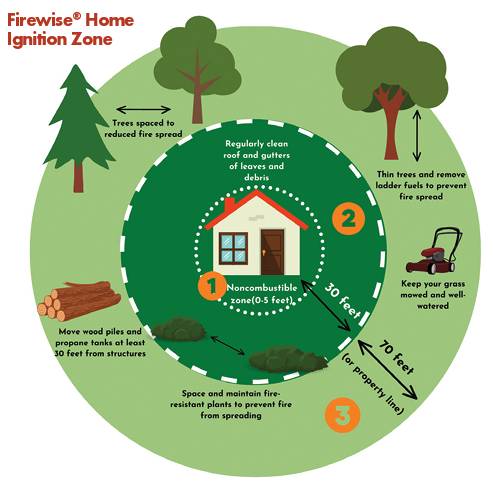
Now more than ever, creating defensible, well-planned landscapes around our homes is essential for safety, community resilience and long-term ecological health. A major part of that work is understanding the home ignition zone, which is the roughly 200 feet around your home that has the greatest influence on a structure’s potential to survive a wildfire. By managing this space thoughtfully, homeowners, renters and property owners can dramatically reduce ignition risk.
This link illustrates a streamlined overview of the three landscape zones and the recommended best practices for each:
Immediate Zone: 0-5 feet from the home
Wind-blown embers are the biggest threat to homes during a wildfire. This zone should be kept as close to non-combustible as possible.
Homeowners can remove wood mulch, firewood, dead leaves, pine needles and other flammable items, install 1/8-inch metal mesh screening on vents and other openings to prevent ember entry, seal gaps in siding, trim and roof edges with high-quality caulk and maintain it annually and use non-flammable fencing materials where a fence attaches to the house.
Intermediate Zone: 5-30 feet from the home
The intermediate zone area should stay “lean, clean, and green,” especially during fire season. Homeowners are encouraged to remove dead grasses, weeds, brush and dried vegetation, keep lawns and native grasses mowed and well-watered, prioritize low-growing, non-woody, herbaceous plants with good spacing and break up continuous fuels with rock features, paths, patios or irrigated landscaping.
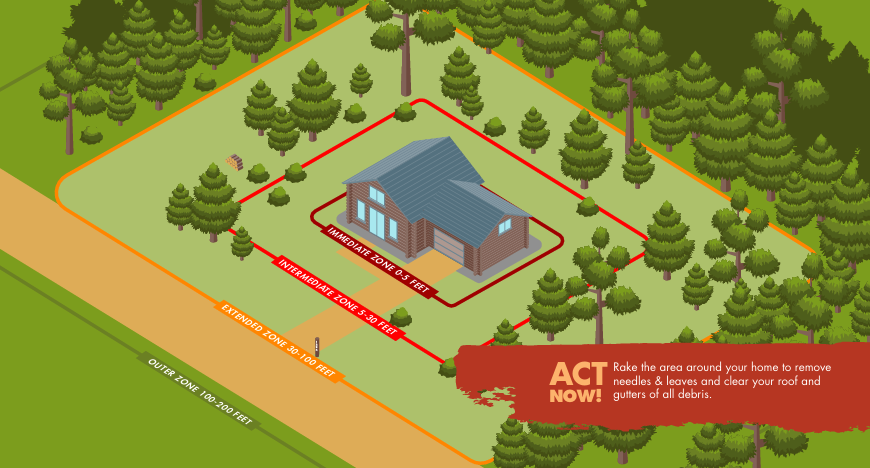
Extended Zone: 30-100 feet or more from the home
In this part of the home ignition zone, the focus is on reducing overall fuel and slowing fire spread. We recommend residents clear leaf litter, needles, and woody debris from the yard, maintain grasses and wildflowers at under eight inches in height and thin overcrowded trees and shrubs to improve spacing and eliminate ladder fuels. Click this link to view the extended fire zone around your home:
A landscape that works smarter, not harder
Creating fire-ready landscapes isn’t about removing nature—it’s about planning with intention. By choosing native plants, reducing excess fuels and using water wisely, residents can establish landscapes that are safer during wildfire season while supporting wildlife habitat, reducing water use and enhancing ecosystem services such as soil health, pollination and watershed function.
WILDFIRE SAFETY & YOUR ELECTRIC COOPERATIVE
The video below provides members with information on how Fall River Electric Cooperative reduces the risk of wildfires in our service territory and how your Co-op responds in the case of a wildfire.
WILDFIRE PREVENTION & HOW MEMBERS CAN PREPARE
The video below is part two of our wildfire series and lets our owner-members know what Fall River Electric does to reduce wildfire risk and what members can do to prepare their property and family in the event of a wildfire in their area.